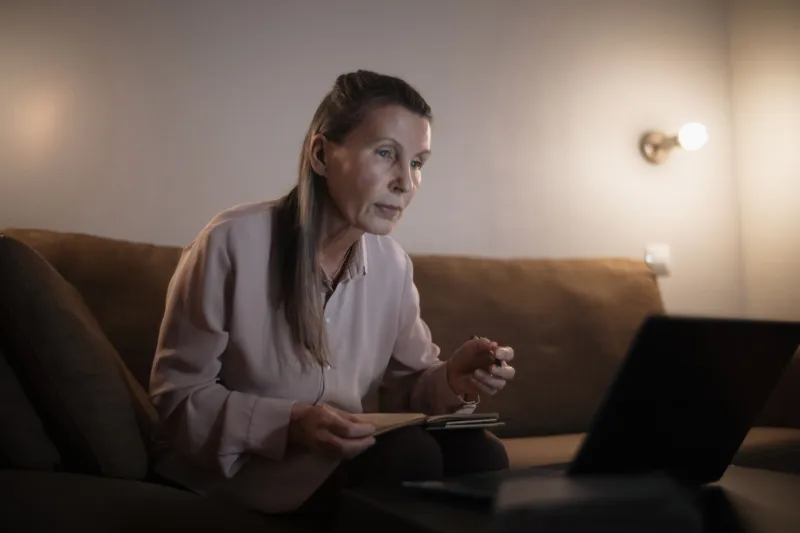
Tuesday, Raw and Slightly Adrift: The Morning After Britain's Emotional Telly

Photo: Dave Roberts , CC BY-SA 2.0, via Wikimedia Commons
It is 7:42 on a Tuesday. The kettle is doing its low rumble, the phone screen is too bright, and you are standing in the kitchen with the vague sense that something has ended. Not a relationship, exactly. Not a job. More like a room you were sitting in for ninety minutes has been taken away, and you are still holding the shape of the chair.
This is the telly therapy hangover: the morning-after fog that follows a heavy night of confession-led television. No prosecco was involved. No late-night chips. Just an hour or so of watching strangers say difficult things to each other while you sat very still on the sofa, feeling a great deal more than you planned to.
In 2026, Britain has started to name this feeling. Group chats are quieter on Tuesday mornings. Calendars have small blocks that say 'soft morning' or 'no meetings before 11'. People are not necessarily being dramatic. They are responding to the fact that emotional telly does something to the nervous system, and the credits do not come with a cool-down lap.
The Morning After the Sofa Before
The classic hangover has a clear villain: one too many pints, a kebab, a regretful text. The telly therapy hangover is harder to pin down. You did not do anything. You watched. But watching is not passive when the show is built around confession, confrontation and the slow unpeeling of a person's defences.
You have been in the room while someone admitted something shameful. You have watched a family argue in a way that felt uncomfortably familiar. You have heard a therapist voice say the thing you have been avoiding saying to your own reflection. By the time the credits roll, your empathy has done a marathon and your brain is still jogging.
So Tuesday morning feels raw. Restless. Oddly grief-stricken. You might feel tender towards a person you have never met, or irritable with a partner who has no idea what happened on screen at 9pm. You might wake at 3am replaying an argument that was not yours. It can feel like a breakup, except nobody dumped you and there is no one to text.
Why Your Brain Does Not Know It Was Only Telly
Parasocial relationships are not a 2026 invention. Britain has been forming one-sided attachments to presenters, soap characters and agony aunts for decades. What has changed is the intensity and the intimacy of the format. Confession-led telly is designed to feel close. The lighting is soft. The pauses are long. The camera stays on the face just a beat longer than is comfortable.
Your brain is good at tuning in. It is less good at drawing a clean line between 'I care about this person' and 'this person is a stranger whose job is to be watched'. Empathy does not have an off switch, and the show does not usually offer one. The credits are abrupt. The next programme starts. Your nervous system is still in listening mode.
That is why the hangover can feel so confusing. You are not sad about your own life, necessarily. You are sad in the shape of someone else's story. And because you cannot do anything about it, the feeling sits there, unspent.
Soft Mornings, Hard Boundaries
The 2026 habit of scheduling a soft morning is not ridiculous. If you have spent the evening absorbing other people's emotional disclosures, giving yourself a slower start is a reasonable bit of self-awareness. A walk before the inbox. A proper breakfast. No news before 10. It is the same logic as not booking a gym class the morning after a long haul flight.
But there is a gently sceptical question worth asking: is this recovery, or is it avoidance? A soft morning once in a while is fine. A soft morning every week because every Monday night leaves you wiped out is worth a second look. Are you recovering from the show, or are you using the show to avoid something in your own life that needs attention?
Catharsis should leave you lighter. A telly-induced hangover leaves you foggy, fragile and vaguely cross. One is a release. The other is a carry-over. The difference is not always obvious at 7:42 on a Tuesday, but it is worth learning to spot.
Catharsis or Carry-Over?
A useful rough guide. Catharsis tends to arrive during the show: you cry, you feel the pressure drop, and afterwards you can talk about what moved you without feeling like you are unravelling. You sleep reasonably. You do not snap at the cat. You can put the telly off.
A hangover tends to arrive afterwards. You wake at 3am with a conversation in your head. You feel tender and defensive at the same time. You avoid real-life conversations because they seem either too shallow or too heavy. You want to watch another episode to soothe yourself, which is a bit like having a pint to cure a pint.
If the latter sounds familiar, the answer is not to ban emotional telly. It is to treat it like a big meal: enjoyable, nourishing sometimes, but not something to eat every night without noticing. Space it out. Do not schedule a difficult conversation for Tuesday morning. Do not immediately rewatch the finale. Ask yourself what the show brought up, rather than what the show would do.
And be careful with the language. Therapy speak is useful until it becomes a script. Your partner is not a case study. Your mate is not a narcissist because they forgot your birthday. The show can start a conversation, but it cannot do the listening for you.
The Tuesday Group Chat
There is a comforting ritual in the Tuesday morning group chat: did you watch it, did you cry, can you believe what she said. Collective decompression is a real thing. It is easier to process a heavy show when someone else is holding the other end of the thread.
But group chats also have a way of making everyone else sound fine. One person says they went straight to sleep. Another says they found it uplifting. You are sitting there feeling like you have been gently run over, wondering why you are the only one who needs a soft morning. The answer is usually that you are not. The person who says 'I'm fine' is often the one who watched it twice.
A Gently Sceptical Guide to Tuesday
Treat the morning after like the morning after anything else that takes it out of you. Drink water. Eat something that is not a biscuit. Get outside before you get on a screen. If you are raw, say you are raw, but do not turn it into a diagnosis.
Ask one honest question: did that show help me feel something I needed to feel, or did it leave me carrying something that is not mine? If it is the first, enjoy it. If it is the second, give yourself a bit of distance. The telly is not a therapist. It is a very good room to sit in for a while, but you still have to leave it.
The Tuesday morning crash is not a crisis. It is a sign that you were paying attention. Just do not let the telly do all the feeling, and do not let the hangover do all the talking. Put the kettle on. The conversation can wait until you are ready for it.