Lights Down, Guard Down: Why Late-Night Telly Therapy Hits Differently
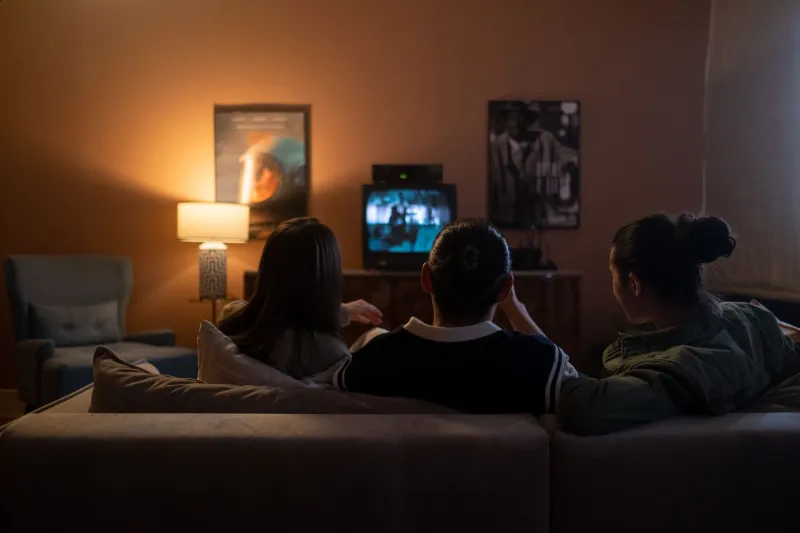
There is a particular kind of British evening that begins with the news music and ends with someone on telly asking a stranger, very gently, when they last felt truly seen. The headlines have been read, the weather map has done its little dance, and the country is meant to be winding down. Instead, a good chunk of us are curled up on the sofa, still in our work clothes, watching other people unpack their childhoods. It is not exactly therapy. It is not exactly not therapy either.
The late post-news slot has become the natural home for advice-led television. It is the hour when the day has stopped asking things of us, when the front door is locked and the social mask comes off. And that, according to the people who study telly habits and the people who make it, is precisely why it lands so hard.
Why the post-news slot feels like a conversation
Daytime telly has its own energy: bright, brisk, a bit chaotic. The post-news hour is different. The house is quieter. The lighting on screen tends to be softer. The interviews are longer. The audience, if there is one, is often seated rather than whooping. Everything about the format signals that we are no longer in the realm of headlines and breaking stories. We are in the realm of feelings.
For viewers, that shift matters. By 10pm, most of us have spent the day making small decisions — what to wear, what to reply, whether to have the second coffee — and our capacity for big emotional labour is thinning out. That can make us more open. It can also make us more suggestible. A late-night confession from a stranger can feel like a heart-to-heart because our own defences are lower, not because the stranger has earned our deepest trust.
That is not necessarily a bad thing. Lots of people find it easier to talk about difficult subjects in the dark, or at the end of the day, or with the TV on in the background. The post-news slot borrows that atmosphere. It creates a sense of shared privacy: you are alone in your living room, but so is everyone else.
Tired brains are honest brains — and telly knows it
There is a reason late-night conversations in real life tend to go one of two ways: either surprisingly tender or slightly unhinged. Fatigue lowers our emotional guard. It also makes us less careful about what we say and more likely to reach for grand conclusions. The same is true of the telly we watch at that hour. A programme that might seem overblown at 7pm can feel profound at 10.30pm.
Producers are not silly. They know the post-news audience is tired, loyal and emotionally available. They also know it is a slot where a certain kind of intimacy is expected. So the camera moves closer. The music drops. The host pauses before the ad break. None of that is automatically manipulative. Television has always been made to hold attention. But when the subject is trauma, family estrangement or a relationship breakdown, the line between atmosphere and engineering gets thinner.
This is where the ethical questions start to gather. Is it fair to ask a vulnerable person to disclose something painful at the precise hour when viewers are least equipped to fact-check their own reactions? Is it right to wrap heavy material in the warm glow of a late-night chat, then cut to a mobile-phone advert? These are not new concerns — Britain has been arguing about confessional telly since the days of Trisha and beyond — but the post-news slot gives them a particular spin. The intimacy feels earned. Often, it has been scheduled.
Intimacy, engineering and the line between them
The best advice-led telly does something useful: it normalises the messy business of being human. It puts language around feelings that people might not have had words for. It can make a viewer feel less alone in their own relationship doubts or family awkwardness. That is a real public service, even when it comes with a theme tune.
The trouble starts when the format pretends to be something it is not. A television programme cannot be a therapist. It cannot offer tailored support, follow-up care or a proper assessment of risk. What it can do is create a mood in which difficult disclosures feel safe and then move briskly on to the next segment. For most viewers, that is fine. For some, it can leave a strange emotional hangover — a sense of having been confided in without being able to help.
There is also the question of what happens after the credits. In recent years, British telly has got better at signposting support and offering aftercare information. That is a welcome shift. But a caption at the end of a programme is not the same as a conversation. The late-night viewer is often alone, tired and not especially likely to ring a helpline at 11pm. The intimacy has been delivered; the follow-through is left to us.
The 10pm confession in your own living room
This is not an argument for switching off. It is an argument for knowing what you are doing. The post-news confessional works because it meets us in a vulnerable moment. That means we need to be a bit more careful about what we do with the feelings it stirs up.
A few practical rules help. Try not to make any big relationship decisions after 10pm. Do not send the text you have been composing in your head since the second ad break. If a programme has opened something up, write it down and look at it in daylight. Late-night clarity is often just fatigue in a nice dressing gown. And if a show leaves you feeling raw, give yourself permission to watch something gentler next time. There is no prize for toughing out the heavy stuff alone on a Tuesday.
It also helps to remember that the people on screen are not your friends, even when the lighting suggests otherwise. They are participants in a format. That does not make their stories fake or their feelings unimportant. It just means the relationship is one-way. You are not their confidant, and they are not your counsellor.
What Britain can take from the sofa
The post-news slot is one of the most honest hours on British telly, precisely because it stops pretending we are all fine. It is also one of the most engineered. Both things can be true. The trick is to enjoy the intimacy without letting it blur into your own life. Watch the confession. Feel the feelings. Then put the kettle on, check in with a real person tomorrow, and remember that the best therapy rarely comes with a cliffhanger before the news.