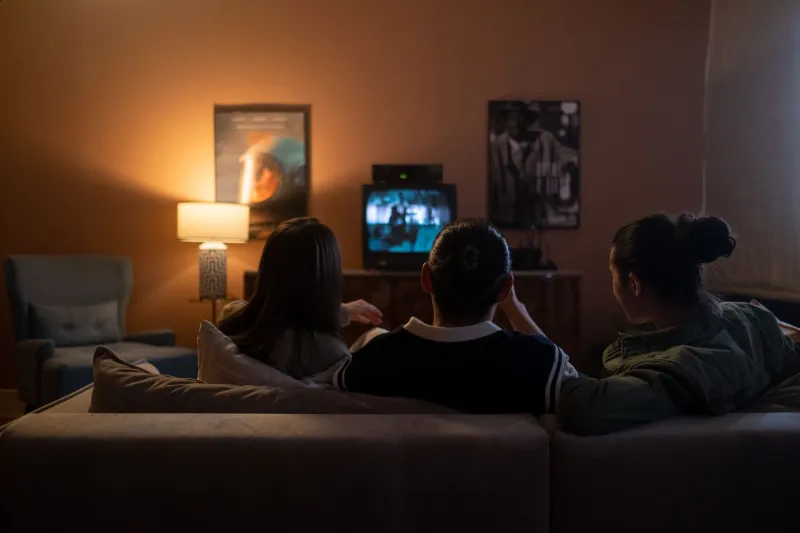
Worksheet and Chill: Why Britain Can’t Stop Doing Telly Therapy Homework
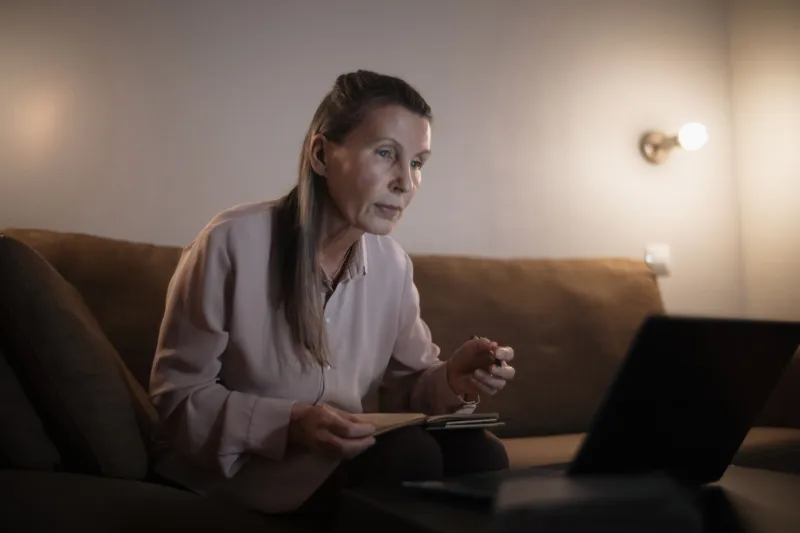
There was a time when the most demanding thing a telly therapist asked of you was to nod thoughtfully and maybe keep a biscuit off the upholstery. In 2026, you’re more likely to be pausing the iPlayer, rummaging for a pen, and wondering whether you’ve got the emotional bandwidth for a worksheet before bed. The take-home task has become as much a part of advice-led telly as the dramatic pause and the concerned head tilt.
From Sofa to Stationery
Journal prompts, boundary scripts, no-contact challenges, ‘write the letter you’ll never send’ — the modern on-screen expert rarely finishes a episode without handing out something that looks suspiciously like coursework. And Britain, a nation never happier than when given a structured activity and a cup of tea, has largely embraced it.
The appeal is obvious. A task turns passive viewing into something that feels like progress. It gives the format a second life after the credits, extending the conversation into WhatsApp groups and office kitchens. It also gives producers a neat narrative arc: problem, intervention, homework, resolution. In a crowded schedules, a tangible exercise is a way to say ‘this isn’t just telly, it’s a tool’. Whether it actually is a tool depends very much on what happens next.
The Kitchen Table Test
When viewers actually try the homework, the results are as mixed as you’d expect. One person’s boundary script — ‘I’d love to come, but I’m not free that evening’ — becomes a genuinely useful bit of armour for a family do. Another person’s journal prompt turns into a 1am spiral on the kitchen floor with a biro and a cold mug of tea.
A no-contact challenge can be clarifying for someone stuck in a loop with an ex. It can also become a weird competitive sport, where the real achievement is telling everyone you managed thirty days. The difference usually isn’t the task itself. It’s whether the person doing it has any support, any feedback, and any idea what to do when the exercise stirs up more than they bargained for.
Counsellors tend to be cautious here, and rightly so. Homework works best when it’s collaborative — chosen together, pitched at the right level, and reviewed in the next session. Telly doesn’t offer that loop. It offers a prompt, a cliffhanger, and a camera-ready sense of closure. That’s not nothing, but it isn’t therapy either.
Where the Line Sits
The line between a useful nudge and performative therapy is fairly clear in practice: a nudge is optional, small, and self-compassionate. Performative therapy is about proving something — to the group chat, to the algorithm, or to yourself. A prompt that invites you to notice one feeling is a nudge. A challenge that demands you announce your progress publicly is a performance.
There’s also the shame trap. If a televised task becomes a moral test — do this and you’re healing, skip it and you’re avoiding — the exercise has stopped being helpful. Real therapeutic homework assumes you might not do it, and that missing it is information, not failure. Telly homework rarely builds in that kind of grace, because grace doesn’t make great telly.
The 2026 Twist: Homework as Social Currency
What’s new this year is how quickly the tasks have become social currency. ‘Did you do the worksheet?’ is a genuine office-kitchen question now. People post their boundary scripts like before-and-after photos. The no-contact challenge has its own hashtag ecosystem. None of this is inherently bad — community can be a powerful motivator — but it does change what the homework is for.
When a task is designed for a screen, it’s already halfway to being content. When viewers turn it into content themselves, the private work can quietly become a public display. That’s the hangover: not the exercise itself, but the pressure to have something to show for it. Britain loves a televised task almost as much as the breakthrough because the task is visible. The breakthrough, sadly, rarely is.
A Healthier Way to Watch
None of this means you should throw the remote at the telly. A good prompt can start a useful conversation with yourself, and a boundary script can be a genuine lifeline when you’re stuck. The trick is to treat the homework like a suggestion from a friend, not a prescription from a professional. Adapt it to your life. Ignore the bits that don’t fit. Give yourself a review date instead of a gold star. And if the task opens something heavy, take that as a sign to talk to a real counsellor rather than a camera crew.
Telly can start the sentence. It can’t finish it for you. In 2026, that’s probably the most useful take-home of all.