The Seven Telly Therapists Britain Quotes Most — Graded by a Real Counsellor
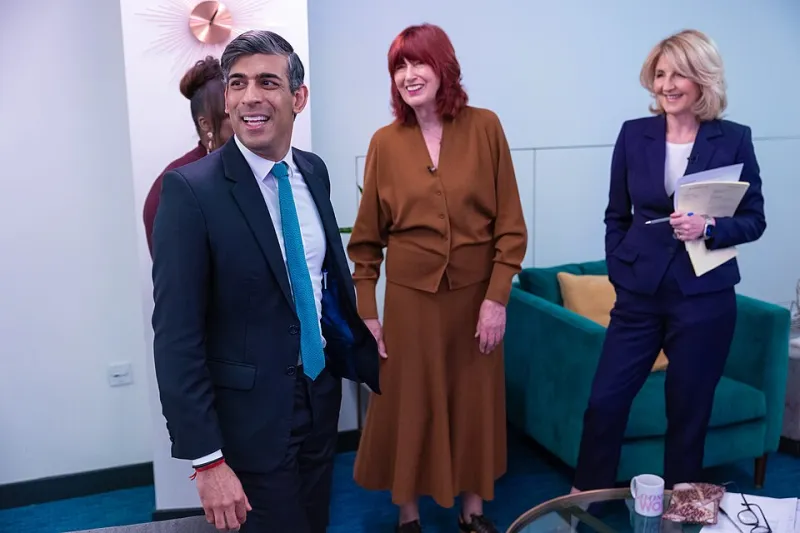
Photo: Simon Walker / No 10 Downing Street, OGL 3, via Wikimedia Commons
Britain has a long, noisy love affair with televised advice. We watch it from the sofa, quote it at the bus stop and send the clip to a mate with the caption: this is literally you. But which telly therapists do we actually repeat in 2026, and which bits should stay on the screen? We ranked seven of the most quoted names on UK telly, from daytime agony aunts to reality-show relationship experts. Each one is scored on empathy, practicality and whether the advice would survive a real counselling session. Our reviewer is a BACP-registered counsellor who asked not to be named, mainly because she has seen what happens when a group chat gets hold of a therapy term.
How we ranked them
This is not a clinical audit. It is a telly audit with a counselling chaser. We looked at the advice viewers quote most: the lines that turn up in TikTok duets, WhatsApp screenshots and office kitchens. Empathy scores how well the advice recognises feelings. Practicality scores whether it gives you something to do next. The session score asks a simple question: if you brought this into a real room with a real therapist, would it hold up, or would it need unpacking?
7. Jeremy Kyle — the spectacle we should stop quoting
Scores: empathy 2/10, practicality 3/10, survives a session 2/10. He is not a therapist and never claimed to be, but his format became a template for public confrontation. Our counsellor's verdict is blunt: it is not advice, it is theatre with a lie detector. What it gets right is that some situations do need a direct question. What it gets dangerously wrong is turning shame into a strategy. Being told you are a disgrace is not a treatment plan.
6. Vanessa Feltz — the quick-fire auntie
Scores: empathy 6/10, practicality 6/10, survives a session 5/10. Feltz is warm, witty and fast. She is good at naming nonsense before it grows legs. The risk is that the punchline arrives before the process. A one-liner can wake you up, but it rarely tells you how to have the conversation tomorrow. Use her for the nudge, not the whole map.
5. Charlene Douglas — the calm reality check
Scores: empathy 8/10, practicality 7/10, survives a session 8/10. Douglas brings a steady, grown-up tone to reality dating chaos. She talks about boundaries without making them sound like a legal document. What she gets right is the pace: feelings first, behaviour second, plan third. What can go wrong is the edit. Reality telly loves a villain, and a calm expert can be sliced into a judge. Still, this is close to what a real session sounds like.
4. Deidre Sanders — the sensible agony aunt
Scores: empathy 8/10, practicality 9/10, survives a session 8/10. Decades of letters have given Sanders something rarer than a catchphrase: judgment. Her advice tends to be practical, unflashy and strangely reassuring. She normalises ordinary problems instead of turning every row into a diagnosis. The danger is sounding old-fashioned in a world that wants labels. But if you want advice you can actually use on a Tuesday night, this is the shelf to reach for.
3. Mel Schilling — the pattern detective
Scores: empathy 7/10, practicality 8/10, survives a session 8/10. Schilling is direct, observational and very good at spotting a repeated pattern. She will tell you what your behaviour looks like from the outside, which is often exactly what a friend cannot do. The weakness is context. Telly needs a neat story, and real people are messier than a three-act edit. Take the pattern-spotting; leave the certainty.
2. Anna Williamson — the structured straight-talker
Scores: empathy 8/10, practicality 8/10, survives a session 8/10. Williamson translates therapy ideas into telly language without sanding off the edges. Boundaries, communication, self-worth: these are useful words when they come with examples. The risk is catchphrase compression, where a complicated idea becomes a fridge magnet. But as a starter kit for better conversations, her advice is solid.
1. Trisha Goddard — the queen of the quotable confrontation
Scores: empathy 9/10, practicality 7/10, survives a session 7/10. Goddard remains the most quotable for a reason. She is warm, direct and gives people permission to be angry without making them feel mad. What she gets right is validation: the sense that your feelings are allowed. What the format can get wrong is the shouty bit. Confrontation makes great telly and terrible homework. Copy the permission, not the volume.
The counsellor's overall verdict
Our reviewer says the biggest problem with telly advice is not that it is wrong. It is that it is compressed. A real session has time for nuance, repair and the bit where someone changes their mind. Telly has four minutes and an ad break. The best telly therapists borrow from real therapy: they ask a question, name a pattern and offer one next step. The worst turn a person into a plot point.
How to steal the good bits without importing the drama
- Take the question, leave the performance. If a line makes you think, keep it. If it makes you want to ring someone and shout, put the kettle on instead.
- Swap labels for descriptions. You are a narcissist is a fight. You ignored me when I told you I was upset is a conversation.
- Check the format. A clip is not a diagnosis. A sofa is not a consulting room. A lie detector is not a boundary.
- Ask what it would sound like in your kitchen. If you cannot say it to your partner without an audience, it is not ready.
- Get real help for the big stuff. Telly can start a thought. It cannot do the repair.
Britain will keep quoting telly therapists in 2026, because we love a good line and we love a shared reference. The trick is to treat the screen like a prompt card, not a prescription. Watch the empathy. Steal the clarity. Leave the shame on the sofa.