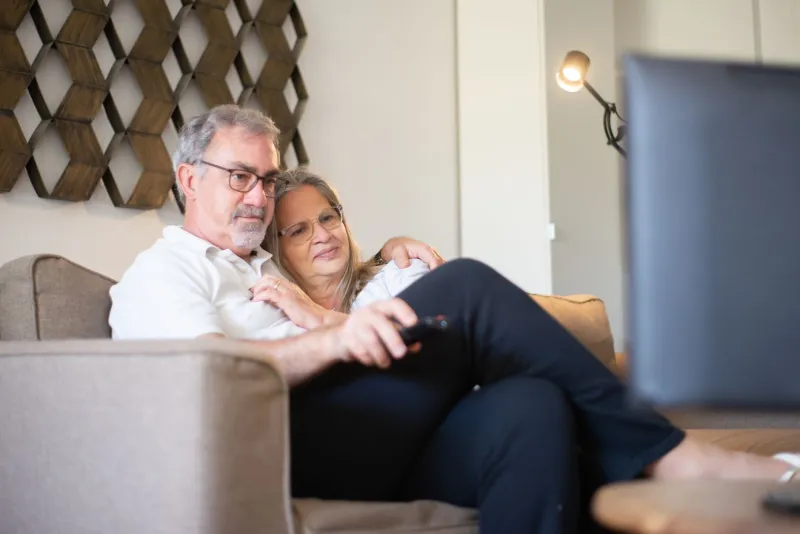
From Trisha's Sofa to TikTok Duets: Seven UK Telly Advice Moments That Predicted 2026

Photo: vintage UK daytime talk show sofa studio audience television, via i.etsystatic.com
The UK has always loved a televised telling-off. Long before TikTok therapists told us to 'hold space' for our triggers, we were gathered around the telly watching strangers air their dirty laundry while a studio audience gasped. Trisha Goddard, Jeremy Kyle, Denise Robertson, the Big Brother Diary Room — these weren't just guilty pleasures. They were the training ground for the therapy-speak boom we're living through in 2026.
So let's take a trip down memory lane, with a critical eye and a 2026 verdict. Because some of these moments predicted exactly the debates we're still having about boundaries, gaslighting and emotional accountability.
1. Trisha Goddard's DNA-test sofa (Trisha)
Trisha's daytime show was the queen of the paternity reveal. The sofa, the envelope, the audience holding its breath — it was public accountability with a side of daytime telly drama. The moment a DNA result was read out, someone's life changed on camera.
What it predicted: Our current obsession with truth-telling and public reckoning. We want receipts, we want clarity, and we want to see someone take responsibility.
2026 verdict: We'd ask about consent and aftercare. A life-changing reveal needs more than a hug from the host and a follow-up slot next week. Boundaries matter — including the boundary between entertainment and duty of care.
2. Jeremy Kyle's lie-detector confrontations (The Jeremy Kyle Show)
Few shows captured the UK's appetite for confrontation like Jeremy Kyle. Lie detectors, raised voices, and a host who believed that accountability could be shouted into existence. The show ended in 2019 after the death of a guest, and the conversation about duty of care has been ongoing ever since.
What it predicted: The idea that emotional accountability is compelling telly — and that the line between helping and humiliating is uncomfortably thin.
2026 verdict: Accountability without humiliation is possible. Spectacle isn't therapy. We've learned — hopefully — that calling someone out on telly isn't the same as helping them change.
3. Denise Robertson on This Morning
Denise Robertson was the nation's agony aunt, offering gentle, practical advice to viewers who wrote in with relationship problems, family fallouts and private heartbreaks. She didn't diagnose; she listened.
What it predicted: The idea that ordinary people need emotional guidance, and that advice can be kind rather than combative.
2026 verdict: We'd call her approach 'trauma-informed' before it was a buzzword. She understood that advice doesn't have to be a shouting match to be compelling — and that sometimes the most useful thing you can offer is a calm, steady voice.
4. Big Brother's Diary Room
The Diary Room was where housemates confessed, cried, processed and occasionally plotted. It was a private-ish space inside a very public house, and it made self-reflection part of the entertainment.
What it predicted: The confessional format. The idea that emotional processing is something we watch — and something we perform.
2026 verdict: We'd recognise it as the ancestor of the 'get ready with me while I process my trauma' video. The Diary Room had a boundary; social media doesn't. We've since blurred the line between sharing and oversharing.
5. Loose Women's panel debates
'Would you put up with it?' 'Is he worth the drama?' Loose Women turned everyday relationship psychology into a panel discussion, with hosts and guests debating boundaries, betrayal and whether you should text him back.
What it predicted: The group chat as advisory board. The idea that women especially turn to each other to make sense of relationships.
2026 verdict: We'd praise the vocabulary and question the certainty. A panel can't diagnose your partner, but it can help you spot a pattern. The trick is knowing the difference between a lively debate and a verdict.
6. Love Island's gaslighting discourse
Love Island gave us recouplings, romantic turmoil and, increasingly, therapy speak. Islanders have discussed 'red flags', 'attachment styles' and 'gaslighting' in ways that would have been unheard of in the show's early years.
What it predicted: The mainstreaming of clinical language in dating culture. The idea that we should name harmful behaviour instead of just tolerating it.
2026 verdict: Useful words, risky overuse. When every bad date is a narcissist, the label loses meaning. But when it helps someone leave a genuinely harmful situation, it's worth its weight in fake tan.
7. TikTok therapists and the 60-second diagnosis
This one isn't UK telly, but it's the current advice show. Therapists and pop-psych creators distil attachment styles, boundaries and narcissism into short videos that rack up millions of views.
What it predicted: Accessibility. The idea that emotional literacy shouldn't be locked behind a waiting list or a paywall.
2026 verdict: Accessibility is a win; nuance is the casualty. We'd ask creators to signpost, not diagnose — and remind viewers that a duet isn't a session.
The through-line
UK telly has always been a classroom for emotional literacy, even when the lesson was messy. Trisha's sofa, Jeremy's confrontations, Denise's kindness, the Diary Room's confessions — they all anticipated the conversations we're having now about boundaries, gaslighting and accountability.
In 2026, we have better language but not always better judgment. The next time you're tempted to diagnose a Love Island contestant, remember Trisha's sofa: the reveal is only the start. The real work happens after the credits.