Second Screen, First Opinion: Why Britain Can't Watch Alone Any More

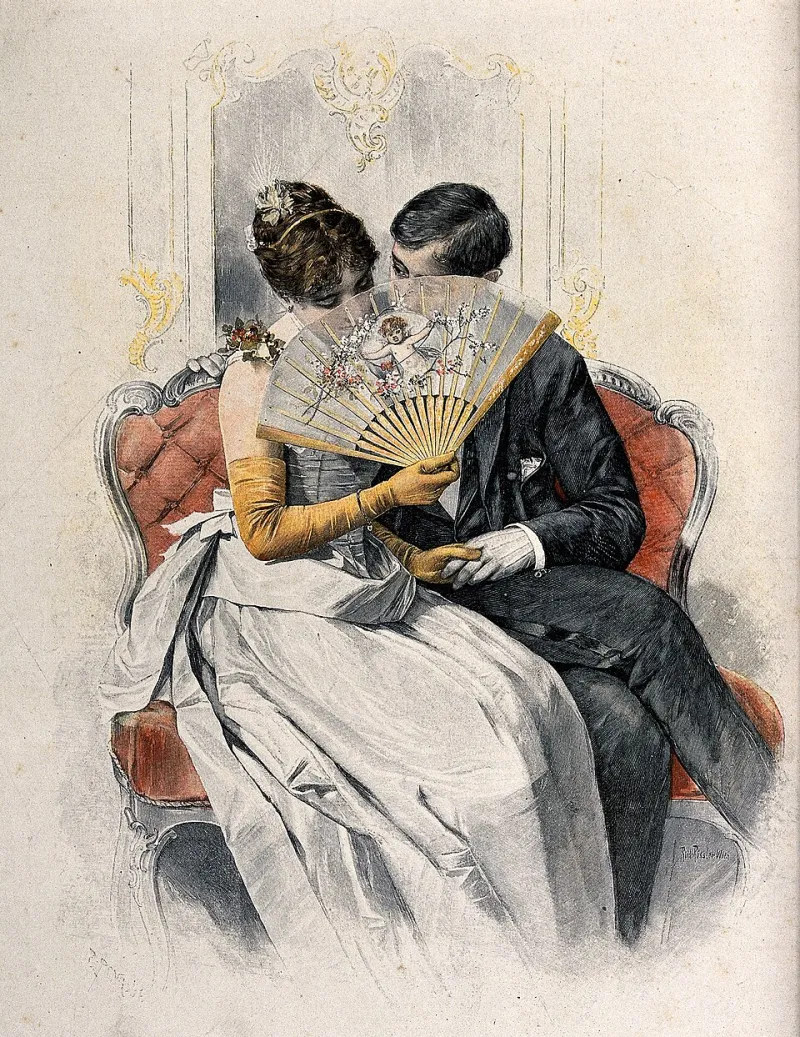
Photo: Internet Archive Book Images, No restrictions, via Wikimedia Commons
Somewhere around nine o'clock on a Tuesday, millions of sofas across Britain do the same thing at the same moment: the telly goes on, and so does the phone.
You know the drill. The show starts, the guest sits down, the therapist-shaped presenter asks the question everyone at home was already thinking, and before the first ad break your group chat has produced a verdict, a counter-verdict, two voice notes and a GIF of a dog looking baffled.
This is the second-screen therapy session, and it has quietly become as much a part of British telly-watching as the brew and the biscuit tin.
The green room in your pocket
In telly, the green room is where guests wait before they go on: nervous, over-caffeinated, rehearsing their lines. That is more or less what a group chat does during an advice-led show. It is the holding pen where everyone works out what they think before they say it out loud.
There is the running commentary ('he did NOT just say that'), the running scorecard ('she's doing the thing with her eyebrows again'), and the running assumption that everyone is watching live, at the same pace, with the same ad breaks.
Except they aren't. And that is where it all gets interesting.
Spoiler etiquette is the new dinner-party manners
Nobody sent out a memo, yet an entire code of conduct has appeared. If you are watching on catch-up, you do not open the chat until you are caught up. If you are watching live, you have roughly ninety seconds of grace before someone else ruins it.
The unspoken rules tend to look like this:
- The 9:04 test. A message that simply says 'did you see that' with no context is a trap. Do not reply until you know which 'that' they mean.
- The overnight pause. After about eleven, the chat belongs to the live audience. Anyone on iPlayer the next morning is expected to scroll past with their eyes half-shut.
- The capital letters warning. If someone starts a message with 'RIGHT' in full caps, there is a spoiler inside. Approach with caution.
- The courtesy recap. Whoever watched first summarises the episode in three lines, spoiler-free, for the person who hasn't got there yet. It is a small act of kindness, and it is now a load-bearing part of many friendships.
The odd thing is how seriously people take it. Ask anyone who has been on the receiving end of a spoilt reveal and they will describe it less like a minor irritation and more like a small betrayal. Which, in fairness, it is.
Half verdict, half support group
The real reason the chats fill up isn't the telly. It's the thing the telly nudges loose.
An episode about a couple who stopped talking to each other will get the usual mockery for ten minutes. Then someone types, 'we went like that for about a year, me and mine', and the whole tone of the conversation shifts. The jokes stop. Someone sends a heart. Someone else asks if things are better now.
That pivot, from panel to support group, happens faster than most people realise. And it is, on balance, a good thing. Britain has never been brilliant at starting the awkward conversation, but it will absolutely have it in writing, at half nine, with the telly on in the background. The screen gives everyone something to look at while they say the difficult bit.
The risk is that it stays in the chat. A mate who admits something hard at 21:47 and gets three laughing emojis because someone misread the tone may not try again. Second-screen support only works if somebody eventually picks up the phone.
When the chat becomes a jury
Here is where it curdles. A guest sits down, gets eight minutes of screen time, and within a quarter of an hour the group has diagnosed them, condemned them and written the follow-up episode.
'He's a narcissist, obviously.' 'She's giving avoidant.' 'The mother's the problem, always is.'
Some of this is just telly talk, the same way people shout at football. But a group chat does something a solo rant cannot: it agrees with you. And once three people have agreed, the fourth is far less likely to say, 'hang on, we've seen about six minutes of this person's life.'
The guest is a stranger who cannot answer back. The chat is a room with no door and no defence. And the verdict usually lands well before the credits roll, which means the programme's own conclusion, whatever it is, arrives at a trial that has already finished.
It also spills. Screenshots of the show travel further than the show. A clip with a caption travels further still. People who never watched the episode end up with a firm opinion about a person they have never seen.
Voice notes and the art of listening badly
Then there are the voice notes. Between the jokes and the recaps, someone goes quiet, and then a three-minute message arrives, recorded in a car or a kitchen, containing far more than the show ever asked for.
Most people listen to the first forty seconds and reply with a thumbs-up. That is the second-screen trap: the format encourages reaction, not response. Reacting is fast and fun. Responding takes effort, and the telly is still on.
A useful rule of thumb: if the voice note runs longer than the telly segment that prompted it, the chat has stopped being a panel and started being something real. Treat it accordingly. Pause the show.
A rough guide to a decent second screen
None of this needs to be solemn. The chat is one of the nicer things about watching telly in Britain in 2026: it is company without the pressure of a visit, and a running joke that renews itself every week.
But a few house rules keep it healthy:
- Judge the episode, not the person. Say what the show did badly before you say what the guest is.
- Ask before you suggest a diagnosis. 'Does that ring a bell?' is a question. 'That's you, that is' is an ambush.
- Check the quiet one. In every chat there is someone who has stopped typing. They are usually the one it landed on.
- Let the credits roll. Give the programme the courtesy of finishing before the sentence is handed down.
- Move it off the chat when it matters. A phone call is still undefeated.
The green room is a lovely place to wait. Just remember that nobody wants to spend their whole life in it.