Humble Pie, Served Warm: The Rise of the On-Air Telly Apology
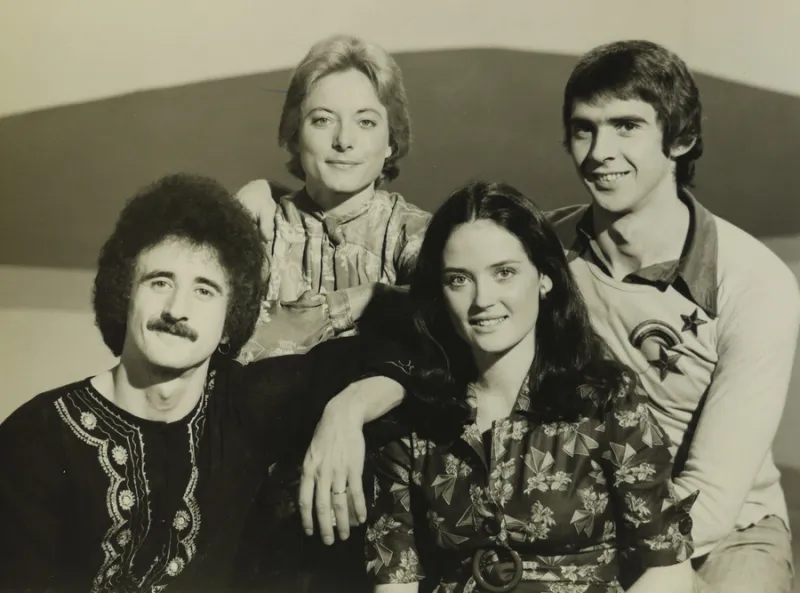
Photo: unknown photographer from DNTV-2, CC BY 2.5, via Wikimedia Commons
There is a particular kind of British pleasure in watching someone who was extremely sure of themselves ten minutes earlier discover that they were not, in fact, quite right.
We used to get it from the weather forecast. These days we get it from advice-led telly, where presenters who spend an hour reading other people's lives out loud occasionally have to read out a correction. In 2026, that has stopped being a rare embarrassment and become a recognisable part of the genre.
The letter that used to take a fortnight
Complaining about telly is one of the oldest viewer sports in the country. The BBC's Points of View has been reading out letters from the annoyed since 1961, and it taught generations of British viewers something important: if you shout at the screen, the screen might eventually shout back.
There was a whole grammar to it. You wrote a letter, you posted it, you waited. Sometimes you got an answer. Sometimes you got a presenter raising one eyebrow at your handwriting. Watchdog built an entire career on the idea that viewers, collectively, could make things move.
The difference now is speed. A viewer doesn't write in any more. They post, they tag, they screenshot, and by the next morning the production team has read four hundred versions of the same complaint before anyone has had breakfast.
What changed in 2026
A few things, all at once.
First, the subjects of these shows are no longer anonymous. Guests appear on camera, get identified, and then go home to a phone full of notifications. When a programme gets the story wrong, the person who has to live with it is not the presenter.
Second, viewers have got better at spotting the joins. Britain has spent years absorbing therapy language, and it now notices when a show uses a diagnosis as shorthand for 'the one we've decided is the villain'. Narcissist and avoidant are no longer neutral words when they are applied to a stranger in eight minutes of edited footage.
Third, the complaints are specific. It is no longer 'that was unfair'. It is 'you cut the sentence that explained why she reacted that way'. Specific is harder to shrug off.
What a good correction looks like
Having watched a fair few of these over the year, there are patterns. The ones that rebuild a bit of trust tend to share four habits.
They name the thing. Not 'some viewers have raised concerns', which is the equivalent of a shrug in a nice jumper. But 'we said X, and X was wrong'.
They say who it cost. A correction that doesn't mention the guest is just a show tidying up after itself.
They say what changes. A tighter edit, an off-air check, an offer of aftercare. Something small and concrete beats a large and vague promise.
They come early. An apology a fortnight later, buried in a Friday-night slot, will be read as a scheduling decision rather than a change of heart. One that opens the following episode costs something.
And the ones that fail usually fail in the same way: they apologise for the offence and never for the act. 'We're sorry if anyone was upset' is not a correction, it is a mood.
When sorry becomes the segment
Here is the cynic's case, and it deserves a hearing.
An apology is television. It has a beginning, a middle and an end. It can be scored. It can be given a title card. Put a presenter alone in a studio, in softer lighting, and a sorry can land with the same thud as a reunion or a reveal.
Which means the correction can quietly become another unit of content. There is a version of this where a programme gets something wrong precisely so it can spend ninety seconds of the next episode sounding contrite, and the whole loop — outrage, apology, engagement — becomes the format.
The tell is what happens to the person involved. If they disappear from the story once the apology has aired, then the apology was for the audience, not for them. If they are still there, still supported, still able to say whether the correction worked for them, then it is the real thing.
Why we care so much
Part of this is simply that Britain likes a reckoning, provided it doesn't have to be the one saying sorry.
But there is something more interesting going on. Advice-led telly has spent years asking viewers to trust its judgement. It commented, it decoded, it explained other people's relationships with the confidence of someone who has never had to load a dishwasher in a bad mood.
So when it gets something wrong, the disappointment lands harder than it would with any other kind of show. You don't feel misinformed; you feel a bit daft for having gone along with it. And a decent apology is the only thing that reliably fixes that.
That is worth holding on to. The on-air correction is not a scandal, in most cases. It is the machinery working. A show that never apologises isn't confident, it's unlistened to.
The standard, in 2026, is quite simple. If you are going to talk about other people's lives in front of a nation, you should be able to say sorry in the same voice you used to say everything else.